Random Picks#1
Devil's Gate
4.0#1
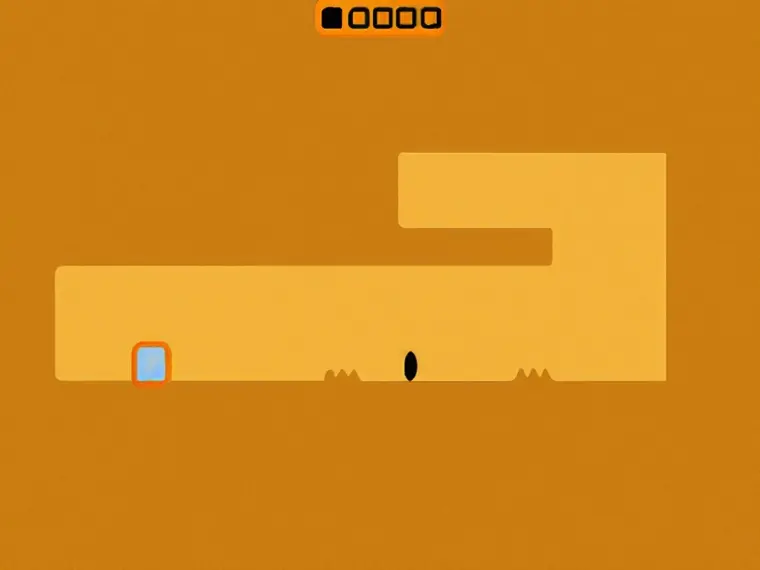
Devil's Gate is a platformer game where players guess trap locations on maps to avoid death, testing rationality and reflexes with each critical step.
4.0Platformer
Play Now FreeTwilight Observer is a remastered game developed by WhiteScar Studios, inspired by Among Us and Danganronpa. Set in a mysterious mansion, players take on the role of a character trapped in a time loop, forced to participate in a deadly social deduction game with eight others. In each loop, players must solve murder mysteries, identify hidden killers, and collaborate with a blue-haired girl who retains her memories to escape the cycle. The game incorporates time travel elements and emphasizes the importance of choices, with player decisions directly affecting the story's progression and endings. Themes include identity exploration, the interplay of memory and reality, and tests of humanity. Presented as a visual novel with anime-style art and atmospheric music, it offers a tense and immersive experience.
Core gameplay revolves around social deduction and time loop mechanics. Players explore the mansion, interact with characters, gather clues, and participate in discussions and voting to identify and eliminate killers in each loop. The game features turn-based phases similar to Werewolf, but with real consequences, where wrong choices can lead to character deaths or bad endings. Players leverage the time loop to retry different strategies, unlocking new dialogues and events to gradually uncover the truth. Gameplay focuses on observation, deduction, and decision-making, requiring attention to details like character behaviors, dialogue hints, and environmental changes to find the two killers and achieve the true ending. Multiple branching paths and endings, including good, bad, and neutral ones, enhance replayability.
The game is primarily controlled via mouse or touchscreen. Players click on the screen to converse with characters, select options, explore environments, and collect clues. In social deduction phases, players use the mouse to click vote buttons or choose actions. Menu navigation is done by clicking interface elements, such as starting the game, saving progress, and adjusting settings. Keyboard shortcuts are supported, like spacebar to skip dialogue and ESC to open the menu. Controls are designed to be intuitive, suitable for visual novel and adventure genres, emphasizing interactivity and immersion.
Devil's Gate is a platformer game where players guess trap locations on maps to avoid death, testing rationality and reflexes with each critical step.

An online maze generator that lets you draw routes, adjust difficulty, and share challenge links with friends.

Quickly judge math equations before the timer runs out, solo or two-player duel to sharpen mental math speed.